Introduction
Chemical peels are one of the most effective treatments for improving skin tone, texture, pigmentation, and overall skin clarity. However, many patients considering treatment ask the same question:
“What is recovery like after a chemical peel?”
Understanding the healing process is essential for achieving the best results while minimizing irritation and downtime.
At AnewSkin MedSpa, we provide physician-led chemical peels in Washington, DC, with customized treatment plans designed for all skin types—including skin of color.
This guide explains exactly what to expect after a chemical peel, from day one through final results.
What Happens After a Chemical Peel?
Chemical peels work by accelerating exfoliation and stimulating skin renewal. After treatment, your skin begins shedding damaged outer layers to reveal fresher, healthier skin underneath.
The recovery process depends on:
- Peel strength
- Skin sensitivity
- Treatment goals
- Individual healing response
Light peels may involve minimal downtime, while medium-depth peels require several days of visible peeling.
Immediately After Treatment
Right after your peel, it is normal to experience:
- Mild redness
- Tightness
- Warmth or tingling
- Slight sensitivity
This reaction is expected and usually temporary.
What Your Skin May Look Like
Most patients describe the appearance as:
- Mild sunburn-like redness
- Dryness
- Slight swelling in sensitive areas
The skin barrier is temporarily more sensitive, making proper aftercare essential.
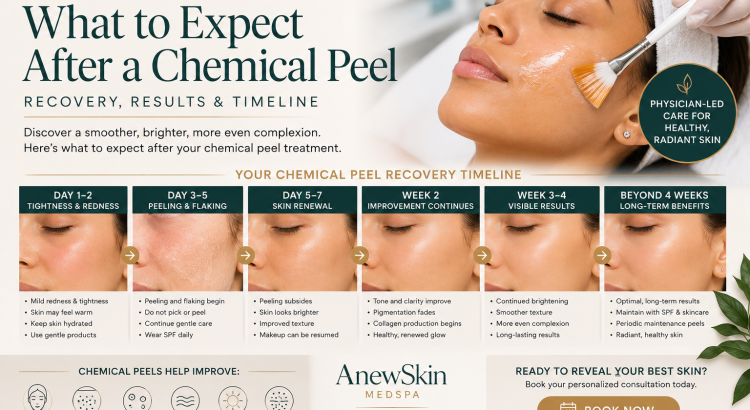
Day-by-Day Chemical Peel Recovery Timeline
Day 1–2: Tightness and Mild Redness
During the first 24–48 hours:
- Skin may feel tight or dry
- Mild redness is common
- Some areas may darken slightly before peeling begins
Important Tips
- Avoid picking or scrubbing the skin
- Use gentle cleansers only
- Apply physician-recommended moisturizer
- Wear sunscreen diligently
Day 3–5: Peeling and Flaking
This is when peeling typically becomes most noticeable.
Common Experiences
- Flaking around the mouth and nose
- Mild shedding of superficial skin layers
- Temporary dryness or rough texture
For medium-depth peels, peeling may be more visible.
Day 5–7: Skin Renewal Phase
As peeling subsides:
- Skin appears brighter
- Texture begins improving
- Pigmentation may start fading
- Makeup application becomes smoother
At this stage, many patients notice a visible glow and fresher skin tone.
Weeks 2–4: Continued Improvement
Collagen stimulation and cellular turnover continue after visible peeling stops.
Ongoing Benefits
- Improved skin clarity
- More even pigmentation
- Softer texture
- Reduction in fine lines and acne marks
Results continue evolving over the following weeks.
What Should You Avoid After a Chemical Peel?
Proper aftercare is critical for safe healing and optimal outcomes.
Avoid the Following
- Direct sun exposure
- Scrubs or exfoliants
- Retinoids unless directed
- Picking peeling skin
- Hot saunas or steam rooms
- Aggressive workouts for 24–48 hours
These can increase irritation or lead to pigmentation complications.
Why Sun Protection Is Essential
After a chemical peel, your skin is more vulnerable to UV damage.
Without Proper Sun Protection
Patients risk:
- Hyperpigmentation
- Uneven healing
- Increased sensitivity
Recommended Protection
- Broad-spectrum SPF 30+ daily
- Hats and protective clothing
- Avoid prolonged direct sunlight
This is especially important for patients with darker skin tones.
Chemical Peel Recovery for Darker Skin Tones
Patients with skin of color require specialized aftercare and treatment selection.
At AnewSkin MedSpa, physician-led evaluation helps reduce risks such as:
- Post-inflammatory hyperpigmentation
- Excess irritation
- Uneven skin tone
Customized peel protocols are essential for safe, effective treatment.
How Soon Will You See Results?
Many patients notice improvements within the first week.
Early Results
- Brighter complexion
- Smoother texture
- Reduced dullness
Progressive Results
Over several weeks:
- Pigmentation fades further
- Acne marks soften
- Fine lines improve
- Skin tone becomes more even
Results are cumulative with repeated treatments.
How Many Chemical Peels Will You Need?
The ideal number of treatments depends on your goals.
Typical Treatment Plans
For Maintenance and Brightening
- Every 4–6 weeks
For Hyperpigmentation or Acne Scars
- Series of 3–6 treatments
For Long-Term Skin Rejuvenation
- Periodic maintenance peels throughout the year
Consistency produces the best outcomes.
What Skin Concerns Improve Most with Chemical Peels?
Chemical peels are especially effective for:
- Hyperpigmentation
- Acne and acne scars
- Sun damage
- Uneven skin tone
- Fine lines
- Dull skin texture
Customized treatment selection helps maximize improvement safely.
Chemical Peels vs Downtime: Are They Worth It?
Many patients worry about peeling or temporary redness.
However, most patients find the recovery process manageable—and the improvement in skin quality well worth the downtime.
Compared to more invasive resurfacing procedures, chemical peels provide:
- Significant rejuvenation
- Lower cost
- Minimal recovery time
- Progressive natural-looking results
Why Patients in Washington, DC Choose AnewSkin MedSpa
At AnewSkin MedSpa, we focus on:
- Physician-led care
- Customized peel selection
- Expertise in skin of color
- Safe treatment protocols
- Natural-looking rejuvenation
We tailor every treatment plan to your unique skin needs and goals.
Who Is a Good Candidate for Chemical Peels?
You may benefit from a chemical peel if you experience:
- Uneven pigmentation
- Acne or acne scars
- Sun damage
- Rough texture
- Early signs of aging
- Dull or tired-looking skin
A consultation helps determine the safest and most effective treatment approach.
Book Your Chemical Peel Consultation Today
If you are ready to refresh your skin with physician-led care:
👉 Schedule your consultation today:
https://www.anewskinmedspa.com/appointments/
Frequently Asked Questions
How long does peeling last?
Most peeling resolves within 5–7 days depending on the peel depth.
Can I wear makeup after a chemical peel?
Most patients can resume makeup once peeling subsides and the skin barrier recovers.
Are chemical peels safe for darker skin tones?
Yes—when properly customized and medically supervised.