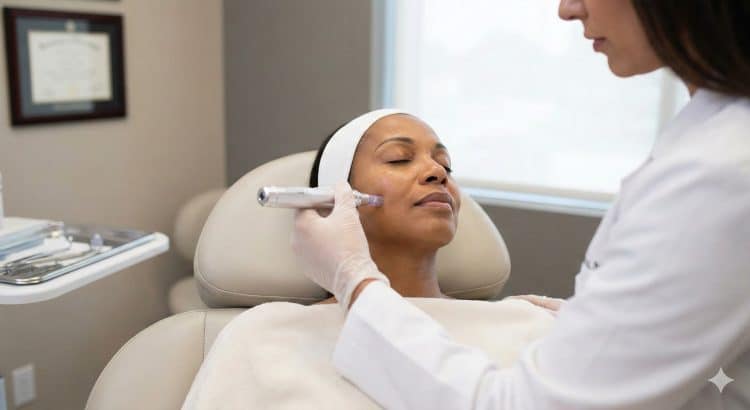
If you’ve been researching ways to improve skin texture, acne scars, enlarged pores, or early signs of aging, you’ve probably come across microneedling—one of the most effective, non-surgical collagen-stimulating treatments available today. But what can you really expect from the experience? And how do you know whether it’s right for your skin?
At AnewSkin in Washington DC, patients often tell us they’ve heard mixed things about microneedling online. Some say the results are incredible. Others say their treatment barely made a difference. The truth is:
👉 Microneedling results depend on technique, device quality, needle depth, and medical expertise.
This guide walks you through every step—before, during, and after microneedling—so you know exactly what to expect and how to get the best possible outcome.
What Microneedling Actually Does (and Why It Works)
Microneedling creates precise, controlled micro-injuries in the skin that trigger your body’s natural healing response. In the weeks that follow, your skin increases its production of:
- Collagen
- Elastin
- New, healthy skin cells
As a result, microneedling helps improve:
- Acne scars
- Rough or uneven texture
- Fine lines
- Enlarged pores
- Dull, tired-looking skin
- Hyperpigmentation (when paired with the right post-care plan)
Because it boosts your skin’s natural renewal process, results look gradual, natural, and long-lasting.
Who Is a Good Candidate for Microneedling?
Microneedling is safe for most skin types—including darker skin tones—when performed by a trained medical provider using the correct settings.
You may be a great candidate if you want:
✔ Smoother texture
✔ Brighter, more even skin
✔ Less visible scars or pores
✔ A non-laser option with minimal downtime
Microneedling is not recommended if you:
✖ Have active acne
✖ Have uncontrolled eczema or psoriasis
✖ Are pregnant (depending on treatment plan)
✖ Recently had sunburn or aggressive exfoliation
A consultation ensures your treatment is tailored and safe for your skin.
Before Treatment: How to Prepare for the Best Results
To ensure your skin responds well:
- Avoid retinoids for 3–5 days
- Pause chemical exfoliants & AHA/BHA products
- Avoid direct sun exposure
- Stay hydrated
- Stop waxing or threading the area 48 hours ahead
If you are prone to hyperpigmentation, your provider may recommend a prep serum to stabilize melanin activity prior to treatment.
During Treatment: What Microneedling Feels Like
Here’s what actually happens during your appointment:
1. Numbing Cream
We begin with a medical-grade numbing cream to keep you comfortable. Most patients describe the sensation as:
“Tiny vibrations” or “a light scratchy feeling.”
2. Custom Needle Depth Selection
This is where expertise truly matters. Different areas of the face require different depths to safely achieve results—for example:
- Cheeks / acne scars: deeper penetration
- Forehead: shallower
- Under-eyes: extremely precise
3. Controlled Microneedling Passes
Your provider makes several passes across the skin to ensure even collagen stimulation.
4. Soothing Recovery Serum
A calming peptide or hyaluronic acid serum is applied to assist healing and lock in hydration.
The full treatment takes 30–45 minutes.
After Treatment: What Happens (Day by Day)
Day 1: Redness + Tightness
Your skin may look like a mild sunburn.
Day 2–3: Slight Dryness or Flaking
This is normal. It means cell turnover is increasing.
Day 4–7: Skin Looks Fresher
Texture begins to improve; pores appear smaller.
Week 2–4: Results Build
You’ll notice smoother, softer skin… with continued improvement over the next 2–3 months.
How Many Microneedling Sessions Do I Need?
Most patients need:
- 3–6 sessions for acne scars
- 3 sessions for texture and fine lines
- 1–2 sessions per year for maintenance
Sessions are spaced about 4–6 weeks apart to allow proper collagen remodeling.
Microneedling vs. Microneedling With PRP (Which Should You Choose?)
Microneedling is powerful on its own—but combining it with PRP (Platelet-Rich Plasma) accelerates healing and enhances results. PRP is ideal if you want:
- Faster recovery
- Brightening of stubborn pigmentation
- Improved acne scar remodeling
- A more youthful, smooth glow
Your provider will help determine which version fits your goals.
Is Microneedling Safe for Darker Skin Tones?
Yes—when performed by a qualified medical provider using conservative settings and correct needle depth.
This is why physician-led treatment matters.
Darker skin tones require careful technique to avoid triggering hyperpigmentation. At AnewSkin, microneedling is customized specifically for your melanin profile and skin history.
When Will I See Results?
Some improvement appears within a week, but full collagen development takes time. Expect peak results around 8–12 weeks after your final session.
Frequently Asked Questions (FAQs)
Is microneedling painful?
Most patients feel mild pressure or vibration, not pain. Numbing cream keeps the treatment comfortable.
How long does microneedling take to heal?
Initial redness fades within 24–48 hours; full skin recovery typically takes 4–7 days.
What results can I expect from microneedling?
Smoother texture, softer scars, reduced fine lines, and a brighter overall complexion.
How many microneedling sessions do I need for acne scars?
Most patients need 3–6 sessions, spaced 4–6 weeks apart.
Is microneedling safe for darker skin?
Yes—when performed by an experienced medical provider with appropriate settings.
Can I wear makeup after microneedling?
Wait 24–48 hours before applying makeup to allow the skin to close.
Ready to Restore Smooth, Radiant Skin?
Microneedling is one of the most effective ways to rejuvenate your skin naturally—with minimal downtime and long-lasting improvements.
If you’re ready to improve texture, soften scars, or refresh your skin:👉 Book your microneedling appointment online.