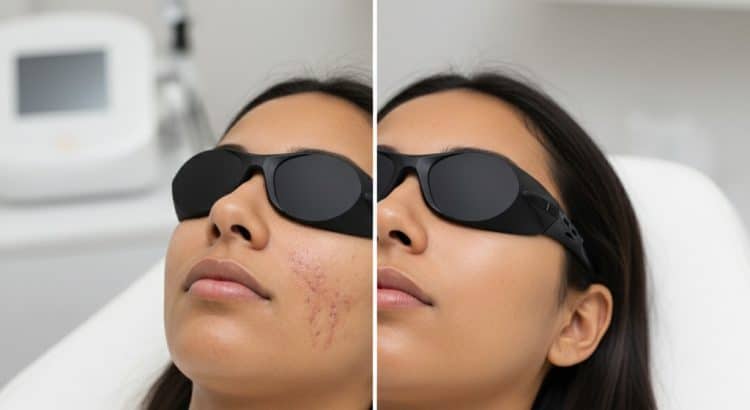
Introduction
For many adults in Washington DC, the battle with acne doesn’t end when the breakouts stop. It leaves behind a lasting reminder: acne scars. These textural changes—from rolling scars to boxcar and icepick scars—can be a significant source of self-consciousness, affecting one’s professional and social confidence.
For years, the options for treating acne scars were limited and often involved significant downtime. But today, one of the most effective and sought-after treatments is microneedling. This minimally invasive procedure has revolutionized the way we treat acne scars, offering real, visible results with minimal recovery time.
But does it really work? As a board-certified physician at AnewSkin, Dr. Molly Sarumi has seen firsthand the transformative power of microneedling for acne scars in DC. This guide will explain the science behind the treatment, what you can expect, and why it has become a go-to solution for so many.
1. How Does Microneedling Work on Acne Scars?
Microneedling, also known as collagen induction therapy, uses a device with fine, sterile needles to create thousands of tiny micro-injuries in the skin. This might sound intimidating, but it’s a precise and controlled process that triggers your body’s natural healing cascade.
The Healing Process:
- Controlled Injury: The micro-needles puncture the skin, breaking down the tough, fibrous scar tissue.
- Inflammatory Response: Your body senses these micro-wounds and rushes to heal them, increasing blood flow and creating new tissue.
- Collagen and Elastin Production: The healing process stimulates the production of new, healthy collagen and elastin—the building blocks of smooth, firm skin.
Over time, this new collagen fills in the depressed scars, smooths the skin’s surface, and improves overall texture and tone. It’s not just covering up the scar; it’s rebuilding the skin from the inside out.
2. What Types of Acne Scars Can Microneedling Treat?
Microneedling is most effective for atrophic (depressed) scars, which are the most common type. This includes:
- Rolling Scars: Wide depressions with sloping edges.
- Boxcar Scars: Broader, box-like depressions with sharply defined edges.
- Icepick Scars: Deep, narrow scars that are often the most difficult to treat (microneedling can soften their appearance, but may require combination therapy).
It can also help improve the appearance of post-inflammatory hyperpigmentation (the dark spots left behind after a pimple heals).
3. The Power of Combining Microneedling with PRP
To enhance the results of microneedling in DC, we often combine it with Platelet-Rich Plasma (PRP). This is often referred to as a “Vampire Facial.”
The PRP Process:
- Blood Draw: A small amount of your own blood is drawn.
- Centrifuge: The blood is spun in a centrifuge to separate the platelets, creating a concentrated serum of your body’s own growth factors.
- Application: This golden PRP serum is applied to your skin immediately after microneedling.
The micro-channels created by the needles allow the PRP to penetrate deep into the skin, supercharging the healing process and accelerating collagen production. This combination leads to faster, more dramatic improvements in acne scarring.
4. What to Expect During a Microneedling Session
Your microneedling for acne scars treatment at our Washington DC practice is a comfortable, clinical procedure.
- Numbing: A topical numbing cream is applied for 30-45 minutes to ensure your comfort.
- Cleansing: Your skin is thoroughly cleansed and prepped.
- The Treatment: The microneedling device is glided across your skin. If you’re having PRP, the serum will be applied at this time.
- Duration: The procedure itself takes about 30 minutes.
After the treatment, your skin will be red, similar to a moderate sunburn. This redness typically subsides within 24-48 hours.
5. How Many Sessions Will I Need?
Like most collagen-stimulating treatments, microneedling is not a one-and-done solution. The results are cumulative.
- Initial Series: Most patients require a series of 3-6 sessions to see significant improvement in acne scars.
- Spacing: Sessions are spaced 4-6 weeks apart to allow the skin to heal and regenerate.
Dr. Sarumi will create a personalized treatment plan for you based on the severity of your scarring and your skin’s response.
6. Why a Physician-Led Treatment is Crucial
With the rise of at-home microneedling rollers and devices, it’s tempting to think you can achieve the same results yourself. This is a dangerous misconception.
Risks of At-Home Microneedling:
- Infection: Improper sterilization can lead to serious skin infections.
- Scarring: Rollers can create jagged, uneven tears in the skin, potentially making scarring worse.
- Incorrect Needle Depth: At-home devices have shorter needles that don’t penetrate deep enough to effectively treat scars.
Professional microneedling in DC at a physician-led practice like AnewSkin ensures:
- Sterile Environment: All equipment is sterile and single-use.
- Adjustable Needle Depth: Dr. Sarumi can adjust the needle depth for different areas of the face to maximize results and safety.
- Medical Expertise: You are in the hands of a medical professional who understands skin anatomy and the healing process.
Conclusion: A Real Solution for Acne Scars
So, does microneedling for acne scars really work? The answer is a resounding yes. When performed correctly by a qualified medical professional, it is one of the most effective and reliable treatments available for improving the texture and appearance of atrophic acne scars.
It offers a minimally invasive, safe, and scientifically-proven way to rebuild your skin and regain your confidence. You don’t have to live with the reminders of past breakouts.
Ready to finally say goodbye to your acne scars?
Schedule a consultation for microneedling at our Washington DC practice today.